研究方向 Research Interests
关于“生态水动力学” —— 这里的“生态”指农业生态系统,“水动力学”是我们的方法内核。课题组以水动力学为方法、以农业生态系统为对象,研究水在其中如何运动、如何与作物和生物相互作用,并把这种理解转化为智能感知装备与精准调控技术。
四个方向构成一条完整链条:机理认知(农业水动力学与数值模拟)→ 智能感知(智慧农田感知与无人系统)→ 精准调控(精准灌溉与水肥一体化智能装备)→ 系统评价(农业水土系统建模与可持续性评价)。
In our group name, “eco” refers to agricultural ecosystems, while “hydrodynamics” is our methodological core. Our four directions form one continuous chain: mechanism (agricultural hydrodynamics & numerical simulation) → sensing (smart farmland sensing & unmanned systems) → regulation (precision irrigation & water-fertilizer equipment) → assessment (water-soil system modeling & sustainability).
农业水动力学与数值模拟
Agricultural Hydrodynamics & Numerical Simulation
作为方法内核,本方向研究水动力学过程本身:面向输配水管网、灌水器和生物污损界面,开展沼蛤附着聚团与滤食行为的水动力学机理、微喷带与射流泵内流数值模拟等研究。发展 CDEM 与 OpenFOAM 耦合功能模块、基础冲刷计算程序等专用数值工具,实现水沙、多相流及灌水器性能的高保真仿真与生物污损阻力预测。
As the methodological core, this direction investigates hydrodynamic processes themselves. Targeting water distribution networks, emitters, and biofouling interfaces, we study the hydrodynamic mechanisms of mussel attachment, aggregation, and filter-feeding behavior, and conduct numerical simulations of internal flows in micro-sprinklers and jet pumps. We also develop dedicated numerical tools such as a CDEM–OpenFOAM coupling module and a foundation scour code, enabling high-fidelity simulation of sediment-laden and multiphase flows and of emitter performance, as well as prediction of biofouling-induced resistance.
框架位置:方法内核 —— 水动力学如何描述水与生物、泥沙的相互作用。
Role in the framework: methodological core — how hydrodynamics describes the interactions between water, organisms and sediment.
智慧农田感知与无人系统
Smart Farmland Sensing & Unmanned Systems
作为生态系统的感知手段,本方向以四足机器狗为主要移动平台,融合北斗/GNSS 高精度定位、RGB-D 视觉及多源农田传感器网络,重点突破复杂农田环境下的自主导航与路径规划,发展基于深度图像的田间杂草精准识别、土壤墒情与作物生长信息的移动式原位监测技术。在此基础上,构建“感知-决策-执行”闭环,实现无人化的田间巡检、精准作业与智能管控。
Using quadruped robotic dogs as the primary mobile platform, integrating BeiDou/GNSS high-precision positioning, RGB-D vision, and multi-source farmland sensor networks, we focus on autonomous navigation and path planning in complex farmland environments, and develop mobile in-situ monitoring technologies for RGB-D image-based weed identification and for soil moisture and crop growth information. On this basis, we build a perception–decision–execution closed loop to achieve unmanned field inspection, precision operations and intelligent management.
框架位置:感知层 —— 用无人系统读取农业生态系统中的水、土、作物信息。
Role in the framework: perception layer — using unmanned systems to read water, soil and crop information from agricultural ecosystems.
机器狗田间巡检 Robot Dog Field Inspection
机器狗视角 Robot Dog Perspective
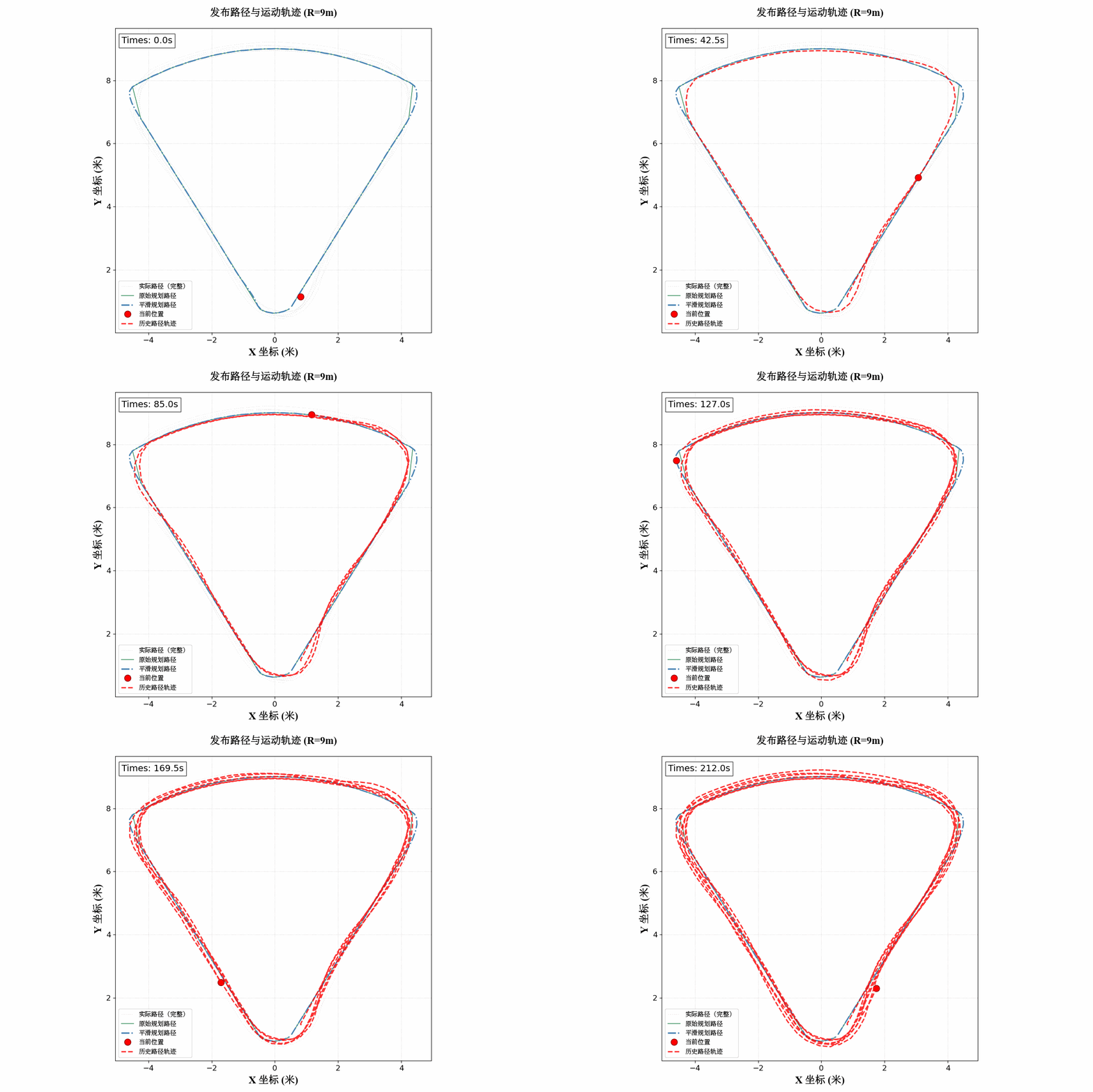
RTK导航 RTK Navigation
RTK导航测试 RTK Navigation Test
精准灌溉与水肥一体化智能装备
Precision Irrigation & Water-Fertilizer Equipment
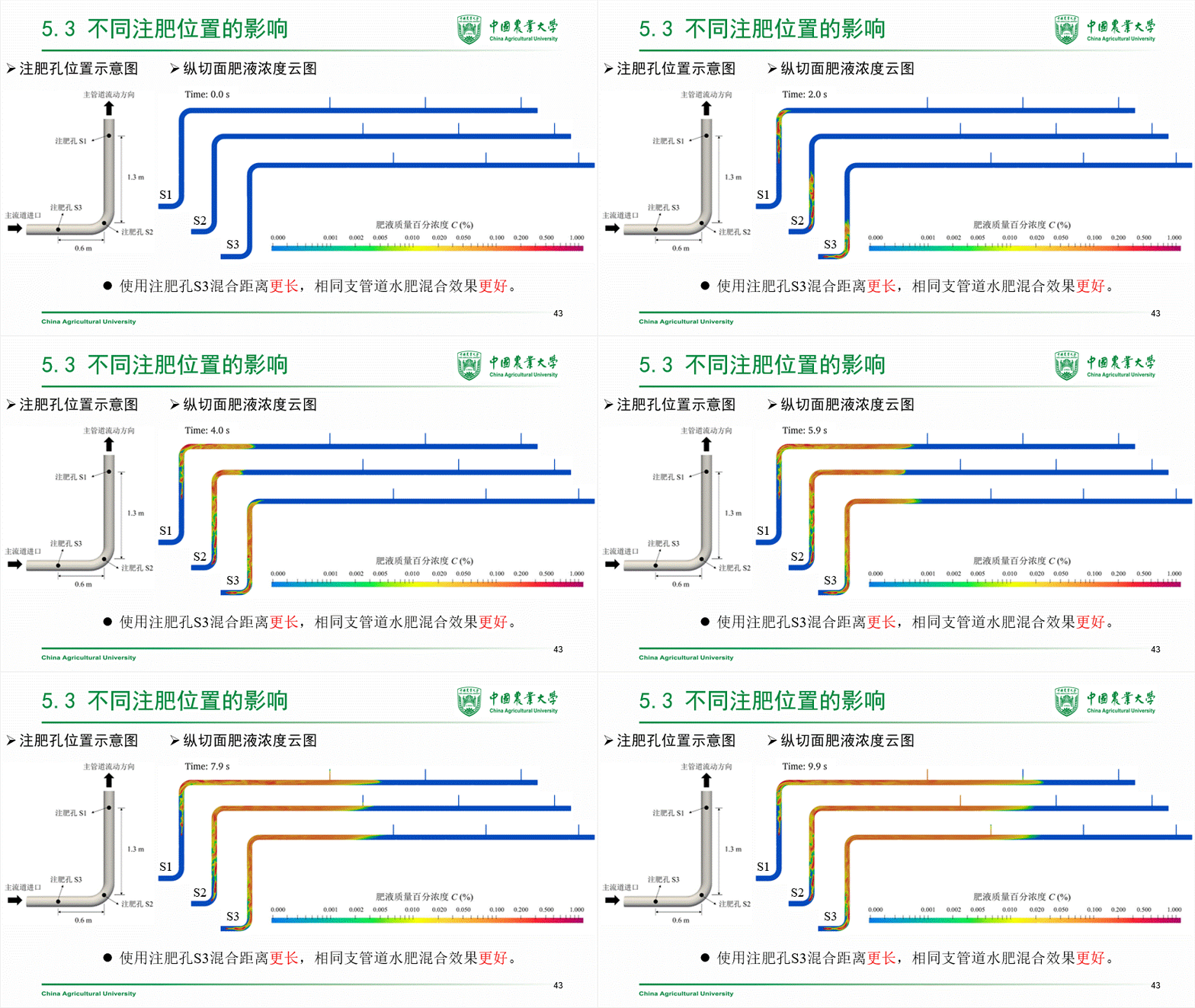
作为调控出口,本方向把水动力学认知转化为可执行的田间装备与技术:围绕大型喷灌机、微喷带等灌溉形式,开展变量灌溉水力控制阀、隔膜式水控阀瞬变流动机理、管道内水肥混合运移等关键部件的水力设计与优化。结合北斗精准定位与农田传感信息,研发水肥时空分布模型,构建灌溉施肥智能决策与精准执行系统。
Focusing on large-scale sprinkler systems and micro-sprinkler hoses, we conduct hydraulic design and optimization of key components including variable-rate irrigation control valves, transient flow mechanisms of diaphragm-type control valves, and water-fertilizer mixing and transport in pipelines. Combined with BeiDou precision positioning and farmland sensor data, we develop spatio-temporal water–fertilizer distribution models and build intelligent decision-making and precision execution systems for irrigation and fertilization.
框架位置:调控层 —— 把水动力学认知转化为可落地的精准灌溉装备。
Role in the framework: regulation layer — turning hydrodynamic insight into deployable precision irrigation equipment.
农业水土系统建模与可持续性评价
Water-Soil System Modeling & Sustainability
作为系统尺度评价,本方向融合农田小气候监测与作物生长信息,构建喷灌水-土-作物耦合模型,揭示灌溉对田间温湿环境及水肥运移吸收的影响机制。在区域与跨国尺度上,开展节水灌溉技术综合效益评价,解析人口老龄化对技术采纳的影响,为水土资源的可持续管理提供跨学科决策支撑。
Integrating farmland microclimate monitoring and crop growth information, we construct sprinkler irrigation water-soil-crop coupled models to reveal the influence mechanisms of irrigation on field temperature, humidity, and water-fertilizer transport and uptake. At regional and cross-national scales, we evaluate the comprehensive benefits of water-saving irrigation technologies and analyze the impact of population aging on technology adoption, providing interdisciplinary decision support for sustainable management of water and soil resources.
框架位置:评价层 —— 在区域与跨国尺度上评价水动力过程的生态与经济社会响应。
Role in the framework: assessment layer — evaluating the ecological and socio-economic responses of hydrodynamic processes at regional and cross-national scales.